
Spring 2026 Research Group
The Spring 2026 CAIDP Team is comprised of
- The Policy Group (PG) - Global AI Policy
-
- Agile Team
- Council of Europe Team
- European Union Team
- G7/G20 Team
- Global Majority Team
- OECD Team
- UNESCO / UN Team
- The Legal Group (LG) - US AI Law and Policy
- Teaching Fellows (TF) - Manage the AI Policy Clinic
- Team Leaders (TL) - Coordinate the AI Research Group Teams
- The Research Group (RG) - Conduct AI policy research, writing, and analysis
Information about the members of our extraordinary team is available below.
Merve Hickok
CAIDP President
CAIDP Policy Director
Policy Group (PG) Director
Marc Rotenberg
CAIDP Executive Director
CAIDP Founder
Christabel Randolph
CAIDP Associate Director
Legal Group (LG) Coordinator
Dr. Grace Thomson
AI Policy Clinic Director
Ren Bin Lee Dixon
Policy Group (PG) Coordinator

Merve Hickok, CAIDP President and Policy Director
Merve is the President and Policy Director at Center for AI & Digital Policy. Merve is a policy expert, with testimony to the US Congress, State of California, New York City and Detroit City councils. She holds policy expert positions at UNESCO Experts without Borders, the Council of Europe, and OECD AI. She is a Council on Foreign Relations – Hitachi Fellow, with research on US-Japan AI policy and governance. Her contributions and perspective have featured in The New York Times, Washington Post, Guardian, CNN, Forbes, Bloomberg, Wired, Scientific American, The Atlantic, Politico, Protocol, The Economist and MIT Technology Review. Merve authored the book ‘From Trustworthy AI Principles to Public Procurement Practices’ - first book to provide an in-depth analysis of the public procurement of AI systems.
Merve Hickok is the founder of AIethicist. Her work focuses on impact of AI systems on individuals and society - particularly the impact on fundamental rights, democratic values, and social justice. At University of Michigan, she is the data ethics lecturer at School of Information, the Responsible Data and AI Advisor at Michigan Institute for Data, AI and Society, and an affiliated faculty at Gerald R. Ford School of Public Policy (Science, Technology, and Public Policy Program).
Merve also works with several non-profit organizations globally to advance both the academic and professional research in this field for underrepresented groups. She has been recognized by a number of organizations - most recently with Lifetime Achievement Award - Women in AI of the Year - 2023, as Runner-up for Responsible AI Leader of the Year - 2022 (Women in AI) and as one of the 100 Brilliant Women in AI Ethics™ – 2021.

Marc Rotenberg, CAIDP
Executive Director and Founder
Marc Rotenberg is Executive Director and Founder of the Center for AI and Digital Policy. He is a leading global expert in data protection, open government, and AI policy. He has served on many international advisory panels, including the OECD AI Group of Experts. Marc helped draft the Universal Guidelines for AI, a widely endorsed human rights framework for the governance of Artificial Intelligence. Marc is the co-editor of The AI Policy Sourcebook (CAIDP 2025) and the AI and Democratic Values Index (CAIDP 2025). Marc is also the coauthor of several textbooks including Privacy and Society (West Academic 2016). He teaches privacy law and the GDPR at Georgetown Law and AI at Georgetown University. Marc has spoken frequently before the US Congress, the European Parliament, the OECD, UNESCO, judicial conferences, and international organizations. Marc has directed international comparative law studies on Privacy and Human Rights, Cryptography and Liberty, and Artificial Intelligence and Democratic Values. Marc publishes widely in academic journals. Marc is a graduate of Harvard College, Stanford Law School, and Georgetown Law. He is an elected member of the American Bar Foundation, the American Law Institute, the Council on Foreign Relations, and the European Law Institute.

Christabel Randolph
Christabel is Associate Director of CAIDP. She holds an Advanced Certification in AI Policy from CAIDP. She has experience working across South-Asia and the Middle-East with multinational corporations, the WHO, IDLO and in private practice. She completed her LL.M in Technology Law & Policy as a merit scholar from Georgetown University Law Center. She also completed a masters in law & economics as an Erasmus Mundus scholar. Christabel commits time as General Secretary of Vattara Hope Foundation, a non-profit that runs the School of Hope (founded in 1990) for slum children in Dhaka and Executive Member, Board of Trustees of World Concern Bangladesh operating micro-finance for ultra-poor in Bangladesh. She is a member of the N.Y. Bar.
CAIDP Legal Group (LG) - Summer 2026

Aarav Minocha
Aarav is an incoming sophomore at Brown University studying Philosophy and Computer Science. He is interested in technology governance, specifically how to make compute safer and more equitable. He hopes to one day go to law school.

Adam Komenski
Adam Komenski is an undergraduate at Syracuse University's Maxwell School of Citizenship and Public Affairs, pursuing a B.S. in Economics with minors in Political Science and Accounting. He recently completed a preliminary literature review on how privacy regulation compliance costs function as fixed-cost barriers driving market concentration in technology sectors. He plans to extend this work into formal research on emerging technology regulation as part of his distinction thesis. Adam plans to pursue law school with a focus on AI regulatory policy.

Aneesha Needamangala
Aneesha Needamangala is a John Jay Scholar at Columbia University, where she is pursuing dual B.A. degrees in Applied Mathematics and Computer Science. Her interests center on the legal challenges raised by artificial intelligence, especially questions of algorithmic accountability and transparency. She is also a Laidlaw Foundation scholar and spent her last summer building a statistical model to predict the decline of endangered languages. Her research project was selected for publication in Taylor & Francis’ F1000 academic journal. At CAIDP, she hopes to dive deeper into the intersection of AI law and algorithmic accountability.

Ella Barwick
Ella Barwick is a graduate student in public affairs at the LBJ School at UT Austin and a Graduate Archer Fellow spending her summer in Washington, DC. After over five years designing experiments and conducting data analysis in biotech and applied research, she made the pivot to policy to ask harder questions about who the systems shaping our world are actually built for. Her focus is AI governance, algorithmic accountability, and the uncomfortable overlap between technology and power. When she is not in policy mode, she is organizing with her community, photographing the world around her, playing piano, reading, or somewhere underwater with a scuba tank."
LinkedIn: https://www.linkedin.com/in/eobarwick

Grace Van Benschoten
Grace Van Benschoten is a rising junior at the University of Michigan, where she was accepted into the Gerald R. Ford School of Public Policy, to pursue a Bachelor of Arts in public policy on a pre-law track. She is also pursuing minors in Law, Justice, and Social Change and Science, Technology, and Society. Grace previously worked with the Institute for Social Research at the University of Michigan as a research assistant, where she studied the impact of technology on marginalized populations and presented her findings at a research symposium. She is passionate about the intersection of law, ethics, and emerging technologies.
https://www.linkedin.com/in/grace-van-benschoten-15662931b/
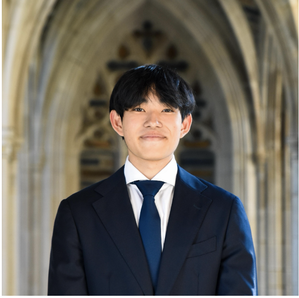
Juhyun Nam
Juhyun Nam is a Duke University student studying economics and computer science. He co-founded OpenPolicy, a platform scoring U.S. senators’ AI policy positions, and hosts The Alignment Gap, an interview series with AI safety researchers.
Linkedin: https://www.linkedin.com/in/juhyun-nam-4ba16b326/
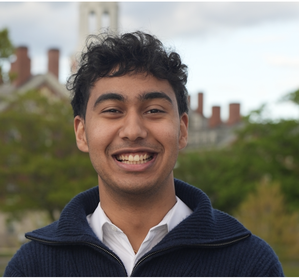
Karan Shah
Karan Shah is a Harvard undergraduate pursuing dual A.B. degrees in Applied Mathematics (Economics) and Philosophy, with interests spanning technology, policy, ethics, and go-to-market strategy. He is currently a Venture Fellow at Xfund and has experience in growth and business development at Sweetspot (YC S23), where he worked on AI tools for government contracting. At Harvard, Karan has held RA roles at the Business and Kennedy schools working on projects related to the economics of public social stances and democracy reform. He is passionate about the intersection of ethics and technology, especially how innovation can advance public good.
https://www.linkedin.com/in/karan-shah15/
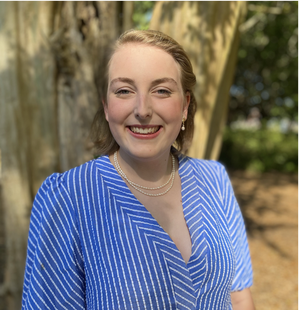
Lillian Smith
Lillian Smith is a graduate of Wofford College in May 2026. She is a Bonner Scholar alumna who spent her collegiate years in service to Lutheran Services Carolinas, a refugee resettlement
non-profit. While at Wofford, she participated in academic and internship programs in Ecuador, Switzerland, and Albania to supplement her degree in International Affairs and Spanish. While
abroad, she conducted research on rural education policies, multilevel development, and anti-corruption initiatives. As a summer research assistant for the Center for AI and Digital Policy,
Lillian aims to further her understanding of AI governance and its intersection with human rights.
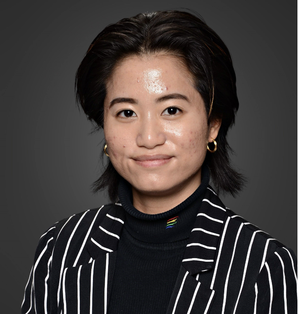
Nienyin (Nasrin) Lin
Nienyin (Nasrin) Lin is a rising 3L at Fordham University School of Law
where her research paper on data privacy and AI governance placed second in the 2026 ABA Antitrust Pitofsky & Saferstein Law Student Writing Competition. Prior to law school, she worked in IP
litigation and fintech regulatory enforcement and government investigations. Nasrin holds a BA in English from Tufts University where her senior thesis was accepted to the Johns Hopkins
University Richard Macksey National Undergraduate Humanities Research Symposium. Nasrin enjoys editorial cartooning and the occasional cardio.
https://www.linkedin.com/in/nasrinl/
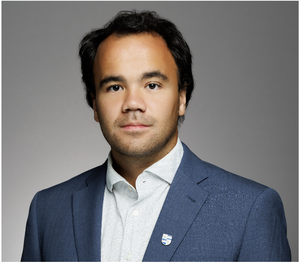
Rafael Gonzalez
Rafael Gonzalez is a Master in Public Policy candidate at the Yale Jackson School of Global Affairs specializing in AI policy. He is particularly interested in how AI will affect economic inequality globally. Previously, Rafael worked for two United Nations improving business operations. Prior to his time at the United Nation, Rafael spent two years at Boston Consulting Group as a strategy consultant. Rafael holds a bachelor’s degree in economics and political science from Amherst College and is from Vancouver, Canada.
https://www.linkedin.com/in/rafael-gonzalez-yalempp/

Taja Nadeau
Taja Nadeau is a rising 2L at UC Berkeley School of Law and an incoming summer associate at Latham & Watkins, where she plans to focus on data privacy and cybersecurity law. During her 1L year, she received the CALI Excellence for the Future Award® for earning the highest grade in Civil Procedure. Prior to law school, Taja worked at a public interest firm representing whistleblowers. She earned her B.A. in International Affairs and Economics from George Washington University and completed her final undergraduate year through the General Course at London School of Economics. Outside of her professional interests, Taja is an oil painter, multi-instrumentalist, and avid solo traveler.

Virthiha Selvamuthukumaran
Virthiha Selvamuthukumaran is a Stamps President's Scholar at the Georgia Institute of Technology, where she studies Economics with a minor in Applications of AI and Machine Learning on a pre-law track. She is interested in the legal frameworks governing algorithmic decision-making, with a focus on AI transparency and accountability. She has worked as a Technology Policy Intern with the Georgia House of Representatives' Technology and Infrastructure Innovation Committee and at the Federal Reserve Bank of Atlanta.
https://www.linkedin.com/in/virthihaselvamuthukumaran/
CAIDP Policy Group (PG) - Spring 2026
Policy Group Coordinator

Ren Bin Lee Dixon
Ren Bin Lee Dixon is an AI policy researcher specializing in the societal and regulatory implications of AI. She focuses on crafting policy analyses that support responsible AI governance and informed decision-making. She has published policy briefs on AI incident reporting with the Center for Security and Emerging Technology (CSET) and has advised organizations such as the UK Information Commissioner’s Office, UNESCO, and OHCHR on AI governance. Ren Bin holds a Master’s in Public Policy with a concentration in AI policy from the Humphrey School of Public Affairs at the University of Minnesota, where she also guest lectures on AI policy topics. Before transitioning into AI policy, she built a career in marketing and communication across Malaysia, China, Denmark, and the United States. Her international experience has given her a nuanced understanding of global affairs and a diverse perspective that informs her research and analysis.

Aditi Rukhaiyar
Aditi Rukhaiyar is a policy and strategic communications professional with 7 years of cross-sector experience spanning the public, private, and non-profit domains. She has designed and led high-impact campaigns and advocacy initiatives to advance policy and business priorities, with expertise in Responsible AI, misinformation and disinformation, data privacy, and cybersecurity. Adept at distilling complex issues into actionable narratives, she engages stakeholders including C-suite executives, policymakers, investors, civil society partners, and media. Her multidisciplinary background integrates stakeholder engagement, partnership development, project management, and strategic storytelling. Aditi has studied at Columbia University, Tata Institute of Social Sciences, and Lady Shri Ram College.
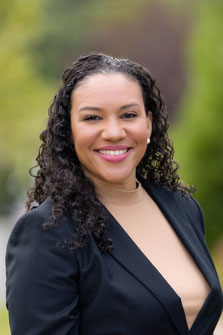
Dr. Andrea Thomas
Dr. Andrea Thomas is a global speaker and trusted advisor at the intersection of artificial intelligence, cultural intelligence, and international education. As Founder of The Common Place, she equips institutions and changemakers with strategy and tools for collaboration and trust. A former UNICEF staff member, Peace Corps Volunteer, and UN Global Diplomacy Fellow, she brings nearly two decades of experience across diplomacy, development, and digital transformation. Dr. Thomas helps leaders navigate complexity with clarity and compassion, shaping policies, partnerships, and learning environments that advance peace, inclusion, and ethical innovation.

Anisa Abeytia
Anisa Abeytia is a research and policy leader specializing in AI governance, model behavior, and digital equity in humanitarian and fragile state contexts. Her work examines how AI systems reason, adapt, and fail in complex social environments, and how these insights inform policy and institutional design. Anisa leads AI Innovation and Applied Model Intelligence at Humma.AI and previously served as a UNHCR Innovation Fellow. She serves on Los Angeles County’s Digital Equity Roadmap committee. Anisa is a PhD Candidate at the University of Sussex and holds an MA from Stanford. Her work appears in The Hill and The New Humanitarian.

Artem Kobrin
Artem Kobrin is a privacy and AI compliance lawyer with 10 years of experience, including significant roles as a privacy legislative compliance consultant at the Canadian Imperial Bank of Commerce and senior privacy specialist at Ukraine's largest bank “PrivatBank”. He holds various certifications, including FIP, AIGP, CIPT, CIPM, CIPP/E, CIPP/US, CIPP/C, CIPP/A, CDPSE, and OneTrust Fellow of Privacy Technology. He is a co-author of the first GDPR compliance book in Ukraine. He is a member of the Expert Committee on the Development of Artificial Intelligence in Ukraine under the Ministry of Digital Transformation of Ukraine.

Aysu Dericioğlu Egemen
Aysu is an AI ethicist, patent attorney and an instructor at Mimar Sinan, Özyeğin, and Bilgi Universities in Istanbul. She lectures on AI ethics, literacy, and intellectual property and currently pursuing a PhD on ethics by design. She delivers interactive workshops and labs on AI ethics and literacy for companies and K-12 students and teachers. She is a member of the UNESCO Türkiye AI Monitoring Group and the co-founder of Nioo Network, a trustworthy AI and co-design agency, and the Editor-in-Chief of Nioo AI, a human-centered AI magazine. She is also one of the co-founders of the Association for AI, Ethics, and Socio-Technical Research.

Brenda Maina
Brenda Maina is an Advocate of the High Court of Kenya. She is a Certified Professional Mediator with extensive experience in legal research, corporate and commercial law, policy development, AI Governance and Data. She is a writer in a leading newspaper in Kenya where she contributes on various topical issues including AI. Brenda enables organizations to responsibly harness innovation in an era of rapid technological change, particularly with AI and emerging technologies by working at the intersection of law, technology, and policy. She also serves as the Team Leader for the Global Majority Group for the Center for AI and Digital Policy which is an independent non- profit research organization, that assesses national AI policies and practices whose aim is to ensure that artificial intelligence and digital policies promote a better society, more fair, more just, and more accountable, based on fundamental rights, democratic institutions, and the rule of law.

Candice Alder
Candice Alder is an AI ethics specialist and psychotherapist focused on artificial intelligence in high-risk, human-impact domains, including systems affecting children and other vulnerable populations. She is the co-founder and principal consultant at Synthetica, advising on responsible AI governance, risk management, and ethical development and integration of AI for high-stakes professional and human-service contexts. With over two decades of experience spanning mental health, education, and regulatory governance leadership, Candice brings practice-grounded insight to AI policy design and implementation. She authored Canada’s first professional guidelines on ethical AI use in clinical counselling/psychotherapy and contributes to international AI governance and standards initiatives.
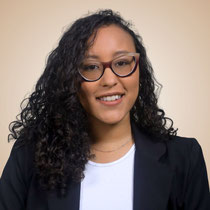
Carolina Judith Medina Guzmán
Carolina Judith Medina Guzmán AI Ethics and Media Researcher specializing in generative AI and bias mitigation. She holds an MA in International Media Studies from Deutsche Welle Akademie, where she graduated with distinction for her thesis, Decoding Biases: Investigating Factors, Disparities, and Mitigation in AI Image Generators. Currently working with the United Nations, she brings nine years of experience in audiovisual production and educational resources design. She contributes to media governance projects and diversity initiatives and serves as part of the leadership group of Women in AI Colombia, promoting diversity and transparency in emerging technologies while bridging the gap between research and practical application.

Caroline Friedman Levy
Caroline Friedman Levy is a clinical psychologist, researcher, and policy specialist with expertise in behavioral science and policy implementation. She holds a B.A. from Cornell University, a Ph.D. in clinical psychology from the University of Vermont, and an M.Sc. in health policy from LSE. She has served as a Policy Fellow for the UK government, a Research-to-Policy Collaboration Scholar at the Edna Bennett Pierce Prevention Research Center, and on the advisory network to the UN Secretary-General's High-Level Advisory Body on AI. In 2024, she co-led the team that published "Liability as a Policy Lever in AI Governance" for the Policy Network on AI.

Danait Girma
Danait Girma is an e-government advisor with expertise in AI governance, digital government, public service provision, and Digital Public Infrastructure. She has a technical background in engineering and data science and holds professional certifications in AI governance. Her work focuses on supporting governments to design and implement inclusive, secure, and scalable digital systems.

Eddie Liywalii
Eddie Liywalii is an IT/AI Policy expert with a Master of Engineering in ICT Policy, Regulation and Management. He is a lecturer in the computer science at Copperbelt University and consultant in AI policy. He is just concluding his PhD in Ethics of AI with a focus on value sensitive design (VSD) in artificial intelligence (AI) to address ethical issues in the implementation of smart traffic signal control (STSC) systems in smart cities at University of Pretoria in South Africa. His areas of interest are AI/ML ethics, AI governance, IoT, Smart Cities, Intelligent Traffic Control System, Value Sensitive Design and Philosophy of Human-Technology relations particularly AI.

Facundo Bonaura
Facundo Bonaura is a lawyer specialized in Tort Law and State Advocacy, with additional training in artificial intelligence, legal innovation, governance, and regulatory analysis. He has authored articles on AI and researches regulatory frameworks, legislative initiatives in Argentina, AI adoption in the judiciary, and neurorights. He is an active member of OdiseIA, ALTA, and the CAIDP AI Policy Clinic.

Jésica Tapia Reyes
Jésica Tapia Reyes is a Mexican Data Scientist and AI Policy expert specializing in NLP, AI Agents, and Responsible AI. She is member of UNESCO’s W4Ethical AI (W4EAI) Network. With over 15 years in public policy, she serves CTO at Analítica Boutique and is a Professor the National Autonomous University of Mexico (UNAM) and UVM. Jésica advocates for gender-inclusive algorithms, bridging the gap between AI and social impact. Her accolades include 1st Place in the 2025 Children's Rights Hackathon and the 2023 COFECE Challenge. A published author in World Politics, she actively leads initiatives for women in technology.

Luisa Jiménez-Mahecha
Lawyer and Professor at Rosario University (Colombia). Innovation Manager at Lloreda Camacho & Co., Secretary General of the Colombian Association of Commercial Lawyers and former Vice President of the Colombian Legaltech Association. Master’s in Leadership for Digital Transformation from CESA, and Master’s in Digital Business from ESIC. Author of the paper “Legal and Economic Challenges of AI Regulation in Latin America and the Caribbean” (Aranzadi Thomson Reuters, 2022).

Marta Bieńkiewic
Marta is the Policy and Partnerships Manager at the Cooperative AI Foundation. She is a certified Tech Steward and an affiliate of the Center for AI and Digital Policy and the Z-Inspection Trustworthy AI Initiative. She was an active member of the EU GPAI Code of Practice working groups, and is also currently serving as a member of the EU Transparent AI systems working group with a focus on providing expert feedback on marking AI agent actions and content.
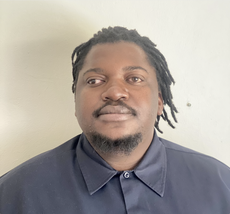
McDonald Moyo
McDonald Moyo is a legal and policy specialist with a focus on human rights, freedom of expression, and the governance of emerging technologies. He holds an LLM in Rule of Law for Development (PROLAW) from Loyola University Chicago. He has extensive experience in legal research, advocacy, and policy, with a strong emphasis on the rule of law, democracy, and sustainable development. His work also spans digital rights, AI policy, and legal reform, with particular attention to the Global South and rights-based governance frameworks.
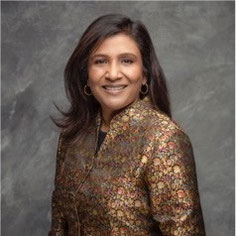
Melodena Stephens
Melodena Stephens is the Professor of Innovation & Technology Governance at the Mohammed Bin Rashid School of Government, Dubai, UAE. She uses design thinking and advocacy to bridge science literacy and policy gaps. She consults and trains in strategy, focusing on themes like agile government and anticipatory governance, innovation strategy and policy, and crisis management. On tech governance, she focuses on frontier technology, working with entities like IEEE SA, the Council of Europe, governments and the private sector. She is the author of the AI Enabled Business: A Smart Decision Kit, and Anticipatory Governance: Shaping Public Value.

Mert Özyiğit
Mert Özyiğit is a lawyer specializing in data protection, fintech, ethics, and compliance, based in İstanbul. A graduate of Özyeğin University Faculty of Law, Mert has experience in law, finance, privacy, and technology governance. He holds a CIPP/E certification from the IAPP, along with credentials in blockchain law, corporate ethics, and compliance. He is deeply committed to upholding human rights and the rule of law and strives to make a meaningful impact in the AI Policy field.

Nayyara Rahman
Nayyara Rahman is a technology management professional with a focus on digital civil rights, specifically data protection and privacy. She was named a Fellow of the Center for AI and Digital Policy in 2024. Her work in translating data protection via a tech-driven solution was selected for Pakistan's second AWS AI/ML Reactor and was also selected for presentation at the International Anti-Corruption Academy's Regional Alumni Conference. In 2022, Nayyara Rahman became a Program Envoy for ITU's 'Women In Cyber' Program to make technology, and specifically, cybersecurity, more inclusive and diverse. She was also invited to share her findings on data management and privacy via two workshops at the Bits and Baüme Conference. She is an active researcher, speaker, and university faculty member. She is the author of whitepapers that analyze the applicability of data protection laws, with a focus on Global South contexts. Her core interests, transparency and accountability, are explored through responsible data management. She has conducted workshops on the negotiated relationship between AI, surveillance, and privacy at the Freedom Not Fear Conference in 2023 and 2024, and is part of All Tech Is Human's Expert Working Group on Cyber and Democracy.

Nazareen Ebrahim
Nazareen Ebrahim is a South African communications technology entrepreneur, AI ethicist, and international conference speaker. She is the founder of Naz Consulting International, which houses the research group Socially Acceptable and her personal brand. A former advisory board member of the South African AI Association, Nazareen is a regular media commentator on AI, digital transformation, and ethics across South Africa and the continent. She also serves as a board director at the Minara Chamber of Commerce, leading the Technology and PR portfolio. She has earned distinction as a team lead in the Centre for AI and Digital Policy’s global AI Policy Clinics, and has spoken at prominent events including the Global AI Summit, Oracle South Africa AI Summit, and Pakistan Travel Mart.

Patrycja Niemczyk
Legal and business professional specializing in emerging technologies and artificial intelligence. Holds EMBA from the Executive MBA Poznań-Atlanta PUEB-GSU program and LL.M from Kozminski University, with advanced certification in Business AI project management. Currently serves as Executive MBA lecturer and new technology law mentor while maintaining active practice as a licensed court mediator. Member of Poland's Ministry of Digital Affairs AI Working Group (GRAI) and the International Association for Artificial Intelligence and Law. Passionate educator focused on responsible and ethical AI implementation, expertly bridging complex legal frameworks with practical technology applications to ensure artificial intelligence serves society's best interests.

Pritika Magima
Pritika Magima is an AI policy and technology governance professional and a Policy Group Member with the Center for AI and Digital Policy (CAIDP). She contributes to research, policy analysis, and drafting CAIDP policy statements on OECD AI policy and agile governance. Her work focuses on translating complex AI laws and regulatory developments into actionable guidance, with attention to accountability, transparency, risk management, and implementation. She has experience across government, consulting, think tanks, and legal practice on AI and digital policy. She holds an LL.M. from Georgetown Law.

Ruoyi Lu
Ruoyi Lu is an associate at Linklaters whose practice focuses on guiding global technology leaders through China's intricate regulatory landscape, particularly concerning AI governance, data security, and national security issues. He has advised on compliance with pan-Asia data protection regulations and provided regulatory due diligence for transactions in sensitive sectors. Beyond his advisory role, Ruoyi regularly contributes to policy advocacy efforts on behalf of certain industry associations and business chambers on AI governance and data localization issues. Ruoyi holds an LL.B. from the China University of Political Science and Law. He is PRC Law Profession qualified, and CIPP/E certified.

Samantha Khoo
Samantha Khoo is a researcher in cyber and technology policy at the Institute of Strategic and International Studies (ISIS) Malaysia. Her work focuses on cybersecurity, social media regulation, and artificial intelligence governance, with particular attention to the implications of digital safety and security sector governance in Southeast Asia. She has published a thematic brief on regional cybersecurity and several other analyses addressing emerging challenges in the governance of digital technologies. She holds a Master’s degree in Development Studies from the Institut de Hautes Études Internationales et du Développement (IHEID) in Geneva, where her research examined the relationship between artificial intelligence and human rights in the context of large language models (LLMs). She also holds a Bachelor’s degree in International Relations and Modern Languages (French and Spanish) from the University of Essex. Samantha was selected as a Fellow in the 2025 YSEALI Artificial Intelligence Governance Cohort, through which she contributes to advancing regional dialogue on the responsible development and regulation of AI. Her work is guided by a commitment to strengthening policy frameworks that safeguard security, ethics, and rights in the digital age.
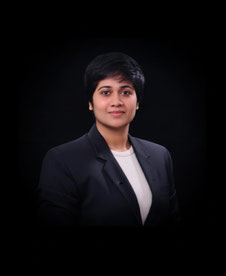
Sathiyaseelan Janani
Sathiyaseelan Janani is a Lecturer at the Faculty of Law, University of Colombo, and a qualified Attorney-at-Law in Sri Lanka. She completed her LL.B. (Honours, Second Class Upper Division) and LL.M. (Merit) at the Faculty of Law, University of Colombo, and is currently pursuing an M.Phil. focusing on the regulation of Artificial Intelligence in Digital Labour Platforms. Her scholarly and professional pursuits are centered on the ethical and governance dimensions of Artificial Intelligence, with a particular emphasis on the regulation of digital labour. She advocates socio-technical and techno-legal approaches to AI regulation. She was a Research Group Member at the Centre for AI and Digital Policy (CAIDP) in Spring 2025 and served as a Team Leader in Fall 2025, completing both Basic and Advanced AI Policy Clinics with Distinction and contributing to the AI & Democratic Values Index.

Dr. Sedef Akinli Kocak
Dr. Sedef Akinli Kocak is the Director of AI Professional Development and Design Lead Applied AI Programs at the Vector Institute, Canada. She leads a suite of programs aimed at building workforce capacity in AI and integrating advanced technologies into current and future industry work streams. She also leads the Global Alliance for Climate Action at Vector. Recognized for her inspirational work and contributions to the Canadian tech and AI ecosystem, Sedef won a Global Leader North America 2025 award in the area of AI for Good. Sedef was appointed as an Adjunct Professor at Ontario Tech University, working within the Trustworthy AI Lab.

Snežana Nikčević
Program manager at NGO 35mm and the Ethical AI Alliance’s Ambassador for the Balkans. Actively engaged in national and regional digital policy processes, with a focus on digital rights, platform regulation, and AI governance. With a background in media studies, produced two feature films and one short film, and coordinated audiovisual projects for international clients including BBC’s Top Gear, Toyota, Samsung, and Endemol Shine. Works as a facilitator and educator with hundreds of civil society organisations, media outlets, and public institutions, and has educated thousands of young people on digital literacy, online safety, and technology for societal change.

Susan Morrissey
Susan Morrissey is an education innovation strategist and leadership coach specializing in program redesign, curriculum evaluation, and the responsible integration of AI and blended learning in schools. She has led at system and school levels as Instructional Leadership Coach at Boston College, has been head of school on both the East and West Coast, and Associate Superintendent of Catholic Schools for Curriculum and Instruction in the Diocese of Providence. Drawing on extensive experience in staff development, strategic planning, and organizational upskilling, she partners with educators to build capacity, improve learning environments, and advance equitable, future-ready education.

Tatiana Zasheva
Tatiana is a public policy and international development professional with experience in policy research, government relations, and regulation of emerging technologies. Prior to joining CAIDP, she represented the national telecommunications authority in key ICT and digital development fora, working groups and expert bodies, including at the International Telecommunications Union (ITU), the UN Economic and Social Commission for Asia and the Pacific (ESCAP), the United Nations Conference on Trade and Development (UNCTAD), and the Asia-Pacific Economic Cooperation (APEC) forum. She currently works with the Association of European Businesses in Russia. Her professional interests lie at the intersection of governance, technology, and risk management. Tatiana has been with CAIDP since 2023 and was named one of the 2024 CAIDP Fellows.

Tatjana Titareva
Tatjana Titareva, PhD, is a Staff Scientist at the AI Policy Lab, Umeå University, Sweden. She leads the United Nations Higher Education Sustainability Initiatives (HESI) Action Group (AG) on the Futures of Higher Education and AI, specifically the Implementation Group (IG) on “AI Ethics, Safety, and Inclusivity in Higher Education,” as well as collaborates with interdisciplinary research hub exploring AI in Education based at the Department of Education, University of Oxford, UK. Previously, she served as a guest editor for the Responsible AI issue of James Madison University (JMU) International Journal on Responsibility. Since 2022, Tatjana has collaborated with UNESCO IESALC, OECD, and the World Bank on research and awareness-raising activities on AI opportunities and risks and global policy frameworks. In 2022-2024, Tatjana received several awards for her research in ethical AI. She has been a fellow at CAIDP AI policy clinics and a member of policy groups since 2024, and has contributed to the AIDV Index 2025.

Tim Sowa
Tim is a public interest technologist with a decade of systems design experience. Tim is currently a Governor's Fellow at the State of Connecticut providing strategic leadership on implementing AI policies and systems across government operations. Tim has previously contributed to the OECD, EU, and US Legal groups at the Center for AI and Digital Policy (CAIDP). Tim holds a master's in Digital Sustainability and Business Ethics from Tampere University (US-Finland Fulbright recipient) and bachelor's in Economics from Bowdoin College.

Tomiris Amirova
Tomiris is a young professional with expertise in AI governance, technology policy, and transatlantic relations with previous experience working at the Florence School of Regulation, European University Institute, and the Centre for European Policy Studies. Tomiris holds a Master of Arts in Transnational Governance with a specialization in Digitalization, Technology and Media from the European University Institute’s School of Transnational Governance in Florence, Italy. She also earned a Bachelor of Arts in Political Science and International Relations from Nazarbayev University in Astana, Kazakhstan.

Vanessa Maidoh
Vanessa Maidoh is an IEEE Certified Lead Assessor (CertifAIEd) and QA/audit professional based in Toronto. At the Center for AI and Digital Policy, she has served as a Research Group member and Team Lead in the AI Policy Clinic, and currently contributes to the Policy Group. Her work bridges technical evaluation and governance, translating system audits into plain-language policy recommendations. She contributed to the AI & Democratic Values Index for Vietnam and France, plus policy analyses on Rwanda and Canada. Vanessa also advises small businesses on responsible AI adoption, turning audits into compliance-ready controls and practical checklists.

Warren Bowles
Warren Bowles is a South African AI ethicist, AI researcher, author, contributor and legal academic with more than 10 years’ experience in both South African public and private academia. He is also an admitted attorney in South Africa and an EDSAFE AI Alliance Catalyst Fellow. He has published works detailing the convergence and impact of AI on law, democracy, education, human rights and labour law. He has also presented on AI-related impacts in different areas at various conferences. He is also a member of the South African AI Association and of the International Association For Safe and Ethical AI.

Zoë Aikman
Zoë Aikman is a law student at McGill University with a focus on technology law and international human rights. She works on research related to the role of AI in governance and conflict resolution, contributing to projects on AI policy and democratic values. She has worked with Human Rights Watch on international justice initiatives, the United Nations Office of Counter-Terrorism on emerging technologies, and the Atlantic Council’s Digital Forensic Research Lab on tech policy and disinformation. Zoë holds a MPhil in Politics and International Studies from the University of Cambridge, where she examined surveillance and AI technologies in global politics, and a BA in Communication Studies and Law & Society from Concordia University
CAIDP Legal Group (LG) - Spring 2026
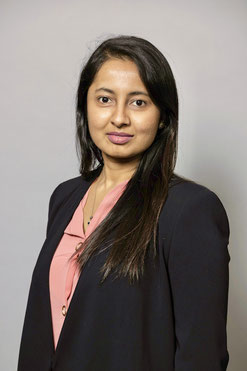
Christabel Randolph (Bangladesh, Georgetown Law)
Christabel is an Advocate of the Supreme Court of Bangladesh. She holds an Advanced Certification in AI Policy from CAIDP. She has experience working across South-Asia and the Middle-East with multinational corporations, the WHO, IDLO and in private practice. She completed her LL.M in Technology Law & Policy as a merit scholar from Georgetown University Law Center. She also completed a masters in law & economics as an Erasmus Mundus scholar. Christabel commits time as General Secretary of Vattara Hope Foundation, a non-profit that runs the School of Hope (founded in 1990) for slum children in Dhaka and Executive Member, Board of Trustees of World Concern Bangladesh operating micro-finance for ultra-poor in Bangladesh.
Legal Group Coordinator

Sarah Chao, Georgetown University
Sarah Chao is a Georgetown University student, pursuing honors in Government and double minoring in Tech, Ethics, & Society (TES) and Law, Justice, & Society (LJS). She intends to pursue law school after completing her undergraduate degree. Prior to CAIDP, Sarah worked as a Google Public Policy Fellow, researching technology law and policy issues such as privacy, artificial intelligence, online speech, content moderation, antitrust, and digital safety. She is also currently a Research Fellow at the Knight-Georgetown Institute, where she analyzes the use of empirical evidence in digital platform litigation across district, appellate, and Supreme Court jurisdictions.
LinkedIn: https://www.linkedin.com/in/sarahh-chao/
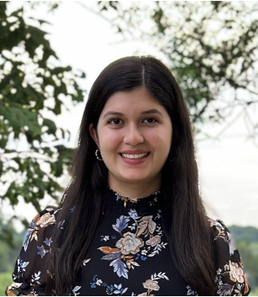
Anika Jaitley, Northwestern University
Anika Jaitley is a 3rd-year pre-law student at Northwestern University, studying cognitive science, artificial intelligence, and legal studies. She is passionate about exploring how emerging technologies are reshaping the legal landscape. As a research assistant for the Law and Technology Initiative at Northwestern Pritzker School of Law, she investigates the current and potential impacts of AI in the judiciary, focusing on both practical applications and ethical considerations. On campus, she leads a newsletter that examines the ethical and societal implications of technology, and she contributes to the law journal, writing on topics including AI trade secrets versus litigation transparency.
LinkedIn: www.linkedin.com/in/anika-Jaitley

Ginny Driscoll, Georgetown University
Ginny Driscoll is an undergraduate student at Georgetown University studying Computer Science with minors in Economics and French. Through her work with Georgetown’s Scientific Research Journal and proximity to current political events in Washington, D.C., the intersection of technology and policy has become a central focus of her academic and professional interests. Ginny is particularly interested in how developments in Artificial Intelligence and network security can influence and shape our nation’s policy.
LinkedIn: https://www.linkedin.com/in/ginnydriscoll

José Pedro Fermandois, Georgetown Law
José Pedro Fermandois is a Chilean lawyer with a background in constitutional and regulatory matters. He has extensive experience in legislative and administrative processes, including advising the Presidency of the Republic of Chile at the Ministry of the Presidential Secretariat on the exercise of regulatory powers, legislative initiatives, and constitutional affairs. He is currently an LL.M. candidate at Georgetown University Law Center, where he focuses on privacy, and AI regulation. At the Center for AI and Digital Policy, he works on research and advocacy related to U.S. and comparative AI governance.
LinkedIn: https://www.linkedin.com/in/jose-pedro-fermandois-santa-cruz-52576b182/

Alyssa Heminger, George Washington Law
Alyssa is a second-year law student at The George Washington University with a focus on artificial intelligence, business, and intellectual property law. She has experience conducting legal research and drafting judicial orders as a judicial intern at the Superior Court of California, Santa Clara County. During her first law school summer, Alyssa studied abroad in Munich, Germany, where she focused on EU data protection law and European institutions. She holds a B.S. in Political Science and Community Development from Portland State University, graduating with highest honors for her thesis on regulating automated decision-making under U.S. legal frameworks. Outside of her studies, Alyssa enjoys running and catching the latest movie.
LinkedIn: https://www.linkedin.com/in/alyssaheminger

Asif Hussain, Georgetown Law
Asif Hussain is a lawyer with over 12 years of experience in technology and financial services across the MENA region and Pakistan. He is qualified to practice law in England & Wales and Pakistan. He is currently pursuing an LL.M. in Technology Law & Policy at Georgetown University Law Center. Prior to his LL.M., Asif served as Head of Legal at Pyypl Ltd., a UAE-based fintech licensed by the Financial Services Regulatory Authority of the Abu Dhabi Global Market. In this role, he led legal strategy for high-stakes compliance matters involving safeguarding of customer data and funds and the deployment of AI tools in regulated processes and service delivery.
While he was Legal Counsel at Citibank, his work included routinely advising on AI, blockchain, and cloud outsourcing initiatives aimed at digitizing banking operations. He was a member of Citi's Cross-Border Data Transfer Committee. Asif represented Citi in stakeholder discussions with the Ministry of Information Technology on Pakistan's Personal Data Protection Bill. Earlier in his career at one of Pakistan's premier law firms, Asif developed deep expertise in technology adoption and regulation within financial services.
LinkedIn: https://www.linkedin.com/in/asif-hussain-47a675b9/
Ariana Haider, Georgetown University
Ariana Haider is a research assistant focused on AI governance, responsible AI, and technology policy. Her background spans startup ecosystem operations, accelerator programs, and cross-functional project management, where she supported founders and emerging technology companies in high-growth environments. Through her work with startups, including many AI and ML companies, she developed a strong interest in how rapidly deployed technologies intersect with ethics, risk, and public accountability. Her current interests center on governance frameworks and oversight structures that help organizations deploy AI responsibly. Ariana is pursuing a Master’s in AI Management at Georgetown University and holds a bachelor’s degree from University of California, Berkeley.
LinkedIn: https://www.linkedin.com/in/arianahaider/

Emma Cameron, Georgetown University
Emma Cameron is a junior at Georgetown University, majoring in Computer Science, Ethics, and Society. Her research interests lie in the intersection of AI governance, ethical technology design, and cybersecurity policy. She is passionate about developing frameworks for emerging technologies that balance individual rights and innovation.

Kitty Zhou, George Washington Law
Kitty Zhou is a second-year student at The George Washington University Law School, studying data privacy, technology, and intellectual property. Having taken a course in AI Law and Policy, I became interested in the intersection between AI governance, data privacy, and technology law and policy. As a member of AIPLAQJ, I am writing my Note on the statutory damages regime in AI copyright infringement litigation. As a Research Assistant to GW Law Prof. Alicia Solow-Niederman, I am researching ongoing discovery disputes in AI litigation. Through my internship at CAIDP, I hope to gain valuable insight into current legal framework and policy surrounding AI and to simultaneously advocate for individuals’ fundamental rights.
LinkedIn: https://www.linkedin.com/in/kittyzhou43/

Josiah Kam, Cornell University
Josiah Kam a junior at Cornell University studying Information Science under the Law, Ethics, and Policy concentration. My main area of interest is exploring controversies arising from training generative AI on copyrighted content. I also enjoy studying how various technologies like cryptocurrency and social media influence society. In my free time I enjoy baking, blogging, and taekwondo
LinkedIn: https://www.linkedin.com/in/jose-pedro-fermandois-santa-cruz-52576b182/

Gustavo De Uchoa, Duke Law
Gustavo De Toni Uchoa is a 2L at Duke Law. I'm originally from Brazil and speak 4 different languages. Prior to law school, I was working at AMD with their server business unit, and last summer I interned with Lenovo's legal department, getting to work on a wide-range of matters. During law school, I've immersed myself in classes like AI Law & Policy and Privacy Law. I'm looking forward to continue exploring the intersection between law, technology, and policy, as well as to help shape a human-centered path to AI integration in the country.
https://www.linkedin.com/in/gustavo-dt-uchoa/
CAIDP Policy Clinic (Teaching Fellows (TFs), Team Leaders (TLs) , Research Group members (RG) - Spring 2026
CAIDP AI Policy Clinic Director
Dr. Grace Thomson, AI Policy Clinic Director
Grace is an Advisor in Policy and Strategy on AI and Public Innovation. She leads strategy and operations of the AI Policy Clinics and the research logistics of the CAIDP Index. As a CAIDP Fellow, she led policy engagement with the UK ICO on Generative AI and advised the G7, the UN, and the African Union on AI governance. Member of the UNESCO Global CSO & Academic Network, UNESCO/IESALC IG on Ethics, Safety, and Inclusion, UAE AI Education Forum, and CLETEC. She mentors CSOs and civil servants on SDG-aligned projects for the Diploma in Governance and Public Innovation (CAF-Universidad Complutense de Madrid).
Teaching Fellows

Tamiko Eto, MS CIP- Senior Teaching Fellow
Tamiko is Founder of TechInHSR, a consulting agency specializing in AI research compliance and ethical standards. She has 20 years experience in research compliance, technology risk assessment, and data sharing. Ms. Eto is a recognized thought leader in interpreting and shaping policies around AI-enabled research, bridging the gap between cutting-edge innovation and regulatory frameworks. Her work focuses on building institutional capacity for AI oversight through frameworks that are rigorous and pragmatic, ensuring AI research can advance without compromising the fundamental protections that safeguard research participants.

Varsha Sewlal - Teaching Fellow
Varsha is a Privacy and Tech Lawyer with a background in civil litigation, human rights law, and commercial law. Executive Legal and Deputy Information Officer at the Railway Safety Regulator. Her expertise lies in ICT advisory and training services, drafting legal guidelines and policies, and conducting research on AI regulation, global data protection, cybersecurity frameworks, and ICT law. Varsha is passionate about ICTs and development, crafting effective policy proposals that balance innovation with risk mitigation for societal good. She holds a Bachelor of Social Science, LLB, and LLM in Commercial Law, and is a doctoral candidate. Varsha attained the CAIDP AI Policy Certificates with Distinction and is a Research Fellow and member of the CAIDP Policy Group.
Candice Alder - Teaching Fellow
Candice is an AI ethics/policy specialist and psychotherapist focused on AI governance in high-risk human-impact domains, drawing on over 20 years of experience spanning mental health, education, and regulatory governance leadership. She is the Co-Founder and Principal Consultant at Synthetica, advising on responsible AI governance, risk management, and ethical integration. Candice authored Canada’s first professional guidelines on ethical AI use in psychotherapy and contributes to international AI governance and standards initiatives. Candice attained the CAIDP AI Policy Certifications with Distinction and is a member of the CAIDP Policy Group.
Cecilia Garcia Podoley- Teaching Fellow
Cecilia Garcia Podoley is a lawyer and seasoned ethics, compliance, and AI-governance specialist with three decades of international experience. She has led compliance programs at several multinational enterprises, and currently serves as Vice-Chair of the Board and Co-Chair of the AI and Compliance Working Group at Ethics & Compliance Switzerland. Cecilia holds a JD in public international law, a specialization in high-tech law, and recent certifications in computational social science and AI governance. Fluent in four languages, she advises the Ethical AI Alliance, writes on AI ethics for Le Monde Économique, and advises companies on ethical AI and AI governance. She lives in Geneva, Switzerland.

Marcela Campos Jabôr - Teaching Fellow.
Marcela Campos Jabôr is a Senior Public Law Attorney and AI Governance Specialist with over 15 years of experience in government relations, public procurement, and complex concession and PPP contracts. Advisor to governments and technology-driven organizations on AI policy, regulatory compliance, and human oversight mechanisms, supporting responsible AI deployment and evidence-based governance frameworks. PhD candidate focused on how contractual regulation can mitigate risks of automation bias, opacity, and accountability gaps in the public sector. Marcela attained the CAIDP AI Policy Certificates.
CAIDP Team Leaders (TLs) - Spring 2026

Abdullah Elbi - Team Leader S26
Abdullah Elbi is a doctoral researcher at KU Leuven Centre for IT and IP Law, focusing on the regulation of AI, fundamental rights, data protection, including biometrics, digital identity, human oversight, and employee surveillance. He is a qualified lawyer and certified data protection and AI specialist (CIPP/E & CIPM) with over 7 years of experience in the field. At CiTiP, Abdullah advises on EU and nationally funded projects and provides strategic guidance on data and AI governance.
Agustina Brizio - Team Leader S26
Agustina Brizio is a lawyer and public policy specialist focused on artificial intelligence governance and digital transformation. She holds an MPA in Digital Technologies and Policy from University College London, where her research examined the use of AI tools for evidence synthesis in government. Agustina has held senior public sector roles in Argentina, including Undersecretary of Information Technologies, where she led national AI governance initiatives, cybersecurity strategies, and guidelines for trustworthy AI in the public sector. She currently works as Digital Technologies and Innovation Manager at Asuntos del Sur and contributes to global AI governance research through academic and multilateral networks.

Aiko Shimizu - Team Leader Sp26
Aiko Shimizu leads AI workforce and skills strategy at the intersection of government policy, economic security, and responsible AI adoption at Microsoft. She is also an Adjunct Fellow at the Pacific Forum, and an Advisory Board Member at the Japan Reskilling Initiative. Prior to her current role, Aiko held various public policy roles across the U.S., Japan, and Germany.
Aiko received her graduate degrees from the University of Pennsylvania Law School and Columbia University’s School of International and Public Affairs (SIPA). She received her Bachelor’s degree with Honors in Political Science and International Studies from the University of Chicago.

Alessandro Ciceri - Team Leader Sp26
Alessandro Ciceri is a digital policy researcher specialising in AI governance. He holds an LLM with Distinction from the University of Exeter, where his research focused on AI, data protection, and the GDPR’s right to be forgotten in the context of large language models.
He has contributed to AI governance initiatives through his work with the ITU’s AI for Good, where he supported the AI Governance Dialogue 2025 and contributed to the Annual AI Governance Report 2025. Alessandro is also the founder of the Youth AI Governance Forum, a platform dedicated to promoting meaningful youth representation in AI policy discussions.

Amanda Camilotti - Team Leader S26
Amanda Camilotti is a global attorney at the intersection of international law, tech, and data privacy. She has more than 10 years of experience leading international negotiations, communicating with diverse stakeholders, and managing contracts. She holds a Master of Laws degree and an MBA with a double concentration in Supply Chain Management and Sustainability from the University of Denver.
Amanda leverages her legal and business expertise helping organizations tackle governance, risk, and compliance challenges through effective risk assessment and mitigation strategies. Currently serving as a Team Leader for the Center of AI and Digital Policy (CAIDP), she holds certifications such as SANS AIS247: AI Security Essentials for Business Leader and Google Cybersecurity Professional certificate.

Ameneh Dehshiri – Team Leader, Spring 2026
Ameneh Dehshiri is an AI and digital rights lawyer and researcher working at the intersection of technology, law, and human rights. Her work focuses on AI governance, data protection, and internet freedom, with particular attention to algorithmic bias, data sovereignty, and rights-based regulatory frameworks. She advocates for ethical, transparent, and accountable technologies, especially in contexts of mass surveillance, digital censorship, and corporate power. Through research and policy engagement, she aims to ensure that technological development remains aligned with fundamental human rights and freedoms.

Angesom Teklu - Team Leader Sp26
Angesom Teklu is a Ph.D. student in Policy Analysis researching the societal, economic, and geopolitical implications of frontier AI technologies. With over five years of experience in data analysis and evidence-based policy design, he applies rigorous methodologies to technology impact assessments and policy analysis.
Angesom holds a master's degree in Sustainable International Development with specialization in global economic financing and partnerships. For the past five years, he has worked as both researcher and practitioner, investigating complex challenges at the intersection of global systems and emerging technologies.

Arife Karaçelik- Team Leader S26
Arife Karaçelik is a lawyer with experience in technology, data protection, and e-commerce. She is certified Data Protection Officer (DPO) and has worked on legal issues related to GDPR
compliance, cybersecurity, and artificial intelligence. She combines her legal practice with an interest in emerging technologies and international technology policies; focusing particularly on the intersection of law, AI governance, and digital transformation

Ademulegun Blessing - Team Leader S26
Ademulegun Blessing is Vice President, Chief AI Ethicist at the African Tech for Development Initiative and Founder of Grinwad Integrated Tech Hub. Research focused on algorithmic bias detection and AI governance frameworks for Global South contexts. Team Leader at CAIDP, Fellow at the Pan-African Center for AI Ethics (PACFAIE) and ForHumanity, and sits on the Executive Board of TechKids AI, UK. As co-developer of VisionX Scan, reduced AI system biases by over 30% and co-authored The Truth Behind The Code. Holds certifications in AI Governance (AIGP), Enterprise IT Governance (CGEIT), and Corporate Governance (CGPC).
Camille Garrison – Team Leader S26
Camille Garrison is a Jamaican corporate/ commercial attorney with experience in advising clients on capital markets transactions, intellectual property protection and strategy, and general corporate/ commercial matters. She helps businesses structure deals, protect their intangible assets, and navigate legal complexity.
Camille also has a keen interest in technology law, particularly in the development and regulation of artificial intelligence. This passion drives her work in AI policy and governance, data protection, and digital intellectual property. Outside of work, she enjoys marathoning, hiking, playing tennis, a good game of chess, and remaining engaged with the evolving landscape of AI policy and regulation.
Chazara Clark-Smith - Team Leader S26
Chazara Clark-Smith serves as the Artificial Intelligence (AI) Strategy and Governance Lead for the Chief Information Officer (CIO) of the Internal Revenue Service (IRS) where she led the development of AI strategy and adoption across the IRS. Chazara was also Senior Technical Advisor to the Deputy Director of Submission Processing - Application Development. In 2024 Chazara was awarded the IRS Commissioner’s Award for her role in leading the Information Returns Intake System (IRIS) program. In December of 2023 Chazara also earned the Service to the Citizen Award for her delivery of the IRS Information Returns Modernization program.
Diana Duran- Team Leader S26
Diana Durán is a purpose-driven strategic communications, public affairs, and technology policy leader with 12+ years of experience connecting governments, policymakers, civil society, and citizens across Latin America. Specialized in public policy, digital advocacy, and emerging technologies, including AI governance.
Led cross-regional campaigns contributing to the approval of 41+ national laws by bridging civic voices and institutional decision-making. Passionate about using storytelling, data, and technology to strengthen democracy, expand access, and support mission-driven organizations through empathetic, human-centered leadership.
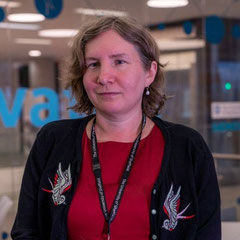
Emma Jones - Team Leader S26
Emma Jones is a Senior Lecturer in Law at the University of Sheffield, UK. Her teaching focuses upon the impacts of digital technology on the legal sector. She is Director of Sheffield Digital Justice, an inter-disciplinary extra-curricular initiative designed to develop students’ critical AI literacy through a variety of projects, including an AI Policy Clinic. She is co-author of the groundbreaking textbook ‘Digital Lawyering: in the 21st Century’ (Routledge, 2021) with a second edition forthcoming in 2026.
Emma is an active researcher in several fields, including digital technology and legal education and wellbeing and emotions in legal education and practice.

Faith Kabata - Team Leader S26
Faith Kabata is a lawyer specialized in international human rights law, focussing on artificial intelligence and human rights. In 2024, she completed post-doctoral research on legal and ethical issues in artificial intelligence and human genomics at the University of KwaZulu Natal. She is a lecturer at Kenyatta University School of Law. Previously, she was the academic Dean of the School and an advisor in the Presidency in Kenya on human rights and rule of law. She holds a LL. B degree from University of Nairobi, LL.M from University of Notre Dame, USA and PhD from University of Pretoria, South Africa.
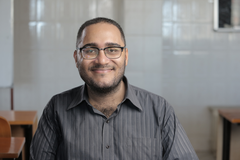
Farhan Yusuf - Team Leader S26
Farhan Yusuf is a pharmacist with fourteen years of experience in health spanning across the public, private and non-profit sectors. He has supported various technical areas in programs implemented in the health sector including leadership & governance, program management, monitoring & evaluation, communications, knowledge management, public private partnerships & policy development. He now brings the same experiences from the health to the technology sector with a keen interest in AI policy and supports a local organization called the Tanzania AI Community as a Policy Advisor while also consulting on different health and leadership related programs in Tanzania and globally.

Germán López Ardila - Team Leader S26
Germán López Ardila is a lawyer and lecturer specializing in technology policy, cybersecurity, artificial intelligence, and Internet governance. He is Vice President of the Colombian Chamber of IT and Telecommunications and a member of UNESCO’s AI Ethics Without Borders Network. He teaches tech policy and governance in Colombia, Guatemala, and Chile. Germán participated in Georgetown University’s Latin American Leadership Program and has been a fellow of organizations such as the Internet Society, LACNIC, the Institute of Technology and Society of Rio de Janeiro, and the Center for AI and Digital Policy.

Hande Ulker Pehlivan - Team Leader S26
Hande is a lawyer based in Istanbul, Türkiye, working in the pharmaceutical industry with a focus on regulatory compliance, technology, and governance. Her professional interests center on the intersection of artificial intelligence, human rights, ethics, and the rule of law.
She is a former Researcher at the Center for AI and Digital Policy (CAIDP), where the program played a key role in shaping her AI policy perspective. As a Team Leader, she is committed to supporting collaborative, inclusive, and rigorous research processes, drawing on both her legal background and her experience as a CAIDP alum.

Hien Phan - Team Leader S26
Hien Phan is a Privacy and Technology Counsel with cross-regional experience in technology, market expansion, FMCG, healthcare, and life insurance. She holds Master’s degrees in International Law (UK) and IT Law (Estonia), and has completed advanced training in AI governance, including the AI Governance Track, Cooperative AI, and CAIDP AI Policy Clinics.
Her interests lie at the intersection of law, technology, and fundamental rights, with work spanning AI in education and AI-driven risk assessment in life insurance. As part of the CAIDP community, Hien hopes to learn from and contribute to collaborative research and policy analysis that support responsible AI.

Ishu Gupta - Team Leader S25
Ishu is a Bloomberg Harvard City Hall Fellow, leading the City of Green Bay’s innovation and data strategy. Appointed by Mayor Genrich, he drives the City’s approach to data, AI, and capacity building - helping to tackle strategic priorities with fresh ideas and cross-functional solutions. He is passionate about change management, responsible technology and innovation in governments. He takes a people-centered approach to research and initiative-building, believing that true impact comes from inclusive and collective leadership. He holds a Master’s in Public Policy from Harvard Kennedy School of Government and a Bachelor of Technology in Electrical Engineering from Aligarh Muslim University.

Janice Lam - Team Leader S26
Strategy and public policy leader working at the intersection of innovation, regulation and technology to advance AI policy design, governance and digital accessibility in highly regulated industries. Adjunct lecturer at the University of Toronto on AI in Healthcare and advisor to multilaterals, governments, startups, and insurers on health policy reform, strategic partnerships, product strategy, AI & data governance, and digital health. Previously, a strategic advisor at the WHO on access to medicines and health technologies in 50+ countries. Janice holds a MSc from LSE and an HBA from the Richard Ivey School of Business.
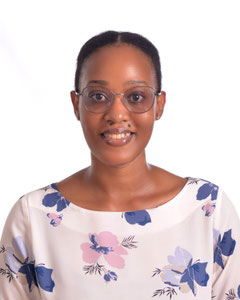
Joanita Nagaba - Team Leader S26
Joanita is the founder of Uzawi Initiative, a non-profit organization focused on AI, society and democracy in Africa. She is a lawyer, a Certified Information Privacy Professional (CIPP/E) and Certified Information Privacy Manager (CIPM) with the International Association of Privacy Professionals (IAPP).
She has trained in Law, Ethics and Policy of AI at the KU Leuven AI Summer School and the Center of AI and Digital Policy (CAIDP). Joanita is a member of the AI and Privacy Working Group at the Africa AI Policy Lab, the Data Privacy and Governance Society of Kenya and the Law Society of Kenya.

Jonathan Lim – Team Leader S26
Australian lawyer, technology analyst, and policy adviser with experience in AI, cybersecurity, and technology regulation. He held roles across the Australian Department of Defence; Department for Foreign Affairs & Trade; and in private practice advising on privacy, ICT regulation, and cyber risk. He holds several postgraduate qualifications including a Juris Doctor, a Master of Cyber Security, and Master of Legal Practice.
His work focuses on AI governance, responsible innovation, and high-risk technologies. He is a member of the International Institute of Space Law, and International Law Association's Committee on AI & Technology Law.

Karma Peiró- Team Leader S26
Technology researcher and executive leader specializing in AI ethics, algorithmic accountability, transparency, and data governance, with 25+ years of experience addressing the social impact of digital technologies.
Co-Founder and Executive Director of the Visualisation for Transparency Foundation (ViT), leading interdisciplinary projects that promote responsible, explainable, and transparent open data for public institutions and civil society.

Dr. Kollin Napier - Team Leader S26
Dr. Kollin Napier is Director of the Mississippi Artificial Intelligence Network (MAIN), leading Mississippi’s coordinated strategy for AI literacy, workforce development, and applied adoption across education, government, and industry. Based at Mississippi Gulf Coast Community College, he works with the Governor’s Office, state agencies, legislators, and industry to advance economic competitiveness. He chairs the Mississippi AI Workforce Readiness Council, serves on the Artificial Intelligence Regulation Task Force, and has provided state and federal testimony, including before the U.S. Congress. Under his leadership, MAIN has delivered no-cost training at scale, built statewide AI labs, secured millions in funding, and forged partnerships.

Kristina Horn -Team Leader S26
Kristina Horn serves as the Manager of the Artificial Intelligence Initiative at CEO Leadership Alliance Orange County (CLAOC), where she leads programs connecting talent to careers in AI, supports local and state AI policy efforts, and fosters collaboration across education, industry, and government. She also works with tech companies to train large language models, applying RLHF techniques, evaluating model outputs, and designing prompt strategies to improve AI performance and reliability. In Spring 2025, she was a research group member at the Center for AI and Digital Policy, focusing on ethical frameworks, democratic values, and human rights.

Kyla Williams Tate - Team Leader S26
Kyla Williams Tate is the inaugural Director of Digital Equity for Cook County, Illinois, where she leads efforts to expand technology access in the nation’s second-largest county. She spearheaded the county’s first Digital Equity Action Plan and Digital Equity Map. In 2025, she was named NDIA’s Digital Equity Champion and ScaleLIT's Literacy Leader.
Kyla’s work bridges public policy, AI, digital equity, and art. She is a Rising Civic AI Leader certified by Aspen Digital and the Aspen Policy Academy, holds a Research Group Certification with Distinction from the Center for AI and Digital Policy, and is an Illinois Road Scholar.
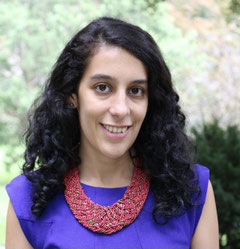
Laura Romero Villamizar - Team Leader S26
Laura is a risk management specialist and policy strategist with experience advising private sector organizations, governments, and international development banks on navigating contextual risks and preventing negative societal impacts.
She specializes in the end-to-end lifecycle of social and human rights risk management. Additionally, she is an expert in monitoring social risk policy adherence, evaluating risk management effectiveness, and driving remediation in high-stakes environments.
Laura holds a M.A in Global Affairs from Yale University, as well as a BA in Law and a Master’s in Literature from Universidad de Los Andes.

Lionceau Clovis AGRE – Team Leader S26
Lionceau Clovis AGRE is an AI policy researcher specializing in responsible AI governance, digital rights, and climate-aligned technology policy in Global South contexts. Trained in physics, artificial intelligence, and data science, his work bridges technical AI systems with regulatory, ethical, and human-rights frameworks. He has contributed to research on AI risk governance, public-interest AI, energy policy, and climate-health resilience in West Africa. A fellow of the CAIDP AI Policy Clinic, he currently leads project management and partnerships at FRIARE, advancing inclusive and accountable AI policy initiatives across Francophone Africa.

Lorena Barić - Team Leader S26
Lorena Barić is the Executive Director of CroAI (Croatian Artificial Intelligence Association), where she leads AI literacy and community-building initiatives and builds bridges between policy, academia and industry in Croatia. Her work focuses on creating dialogue platforms that bring together companies, researchers, educators, and public institutions to support responsible AI adoption, share practical experiences, and strengthen the national AI ecosystem.
In addition to ecosystem-building, she contributes to AI policy-work by supporting structured discussions on AI governance topics across national and European contexts. She is also an Executive Board Member of the European AI Forum.

Lynn Monzer - Team Leader S26
Lynn Monzer works at the intersection of governance, economic inclusion, and global development, with a growing focus on how these issues surface in the context of AI. She previously served as Deputy Director at the Atlantic Council, where she led cross-sector programs and partnerships focused on gender, economic policy, and institutional reform across multiple regions. At the Wilson Center, she led research on economic inclusion in MENA countries. Today, her work centers on how governance and inclusion frameworks must evolve as AI systems shape economic opportunity, decision-making, and power, and on how AI can be used to expand access and mobility rather than reinforce existing inequalities.

Maria Paola Silva - Team Leader S26
Maria Paola Silva is an executive advisor and operations leader with over ten years of experience managing cross-functional teams and coordinating strategic initiatives across government, multilateral institutions, and nonprofits in the U.S. and Latin America. She has advised senior leadership at USAID, managed a $300M global fund, and shaped gender and care economy policies at national and city levels. Her work spans high-level decision support, board engagement, internal operations, and emerging technology governance. Paola holds degrees from Tufts Fletcher School and Universidad de los Andes.

Marta Burgos González- Team Leader S26
Marta Burgos González is a European project management professional with extensive experience designing, coordinating, and implementing international research and innovation projects funded under Horizon 2020, Horizon Europe, IMI/IHI, and Erasmus+. She specialises in artificial intelligence governance, with a strong focus on transparency, accountability, and trustworthy, human-centred AI for public-interest applications. With a background in Sociology and Political Science and as a PhD candidate, she supports multidisciplinary consortia across NGOs, research organisations, and public authorities. Her expertise includes stakeholder engagement, proposal development, dissemination, and strategic alignment with EU policy priorities, ensuring that digital solutions are ethically grounded, socially robust, and aligned with citizens’ needs.

Matteo (Mat) Mastracci - Team Leader S26
Mat Mastracci is a Legal and Policy Officer at the Italian Ministry of Education and an Ethics Expert at the European Commission, where he navigates the intersection of AI, digital governance, and privacy compliance. He has led projects on algorithmic accountability and digital rights, guiding teams through thorny regulatory and technological challenges. In recent years, his work has increasingly focused on AI’s societal impact and long-term risks, exploring how law and policy can anticipate and address emerging threats from high-risk AI systems.

Natalia Alarcón - Team Leader S25
Natalia Alarcón, a lawyer from Pontificia Universidad Javeriana with a specialization in Economics and an LL.M. in Technology Law and Policy from Georgetown University, is Director of Legal Innovation at Posse Herrera Ruiz, leading digital transformation, AI governance, and legal tech initiatives. She co-founded and co-directs the AI and Law Research Seminar at Pontificia Universidad Javeriana, where she also teaches “AI for Lawyers.” Her work with the Center for AI and Digital Policy began as an extern during her LL.M. and progressed to Research Group Member and now Team Leader, advancing AI policy.
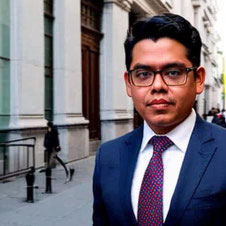
Norman Valdez - Team Leader S26
Norman Valdez is a Toronto-based technology and AI policy leader working at the intersection of responsible AI, digital strategy, and community capacity-building. He is CEO and co-founder of BrainTrainr, a nonprofit advancing inclusive AI education, and an Emerging Technology Fellow with Community Foundations of Canada, supporting cross-sector collaboration on AI governance.
At CERIC, he leads technology, communications, and marketing, translating research into accessible learning products. Norman focuses on practical AI adoption, human rights, and equity, helping nonprofits and community leaders navigate rapid technological change.

Omolola Haastrup -Team Leader S26

Osvaldo Ramirez - Team Leader S26
Osvaldo Ramirez is a global AI and data executive focused on scaling AI, GenAI, and ML from strategy to measurable business impact. He works closely with CEOs and leadership teams to deliver enterprise AI programs with accuracy targets above 97% and operations at scale. He currently serves as a Team Leader at the Center for AI and Digital Policy (CAIDP), guiding global research on responsible AI governance.
With international experience across industries, Osvaldo combines execution, ethics, and transformation to build AI systems that are scalable, accountable, and human-centered.

Oussama Elmerrahi - Team Leader S26
Oussama Elmerrahi is an independent consultant and Senior Data Analyst specializing in Data Governance and Strategy, with a focus on optimizing data quality. He leverages innovative data practices to drive strategic decision-making, mitigate risks, and navigate the complexities of data environments. Oussama is dedicated to delivering sustainable data solutions that align with both environmental and ethical standards.
Currently, Oussama serves as the Vice President of the Young AI Leaders Paris Hub by AI for Good and the International Telecommunication Union (ITU), where he leads initiatives to drive AI innovation for social impact. With a strong background in robotics and industrial engineering, Oussama has held leadership roles, including serving as Chairman and Section Lead at IEEE, where he led cross-functional projects. An alumn and former Youth Ambassador for the Internet Society (ISOC), Oussama has advocated for a free and accessible internet, focusing on inclusion, innovation, and global connectivity.

Pranjal Dwivedi - Team Leader S26
Pranjal Dwivedi is the Co-founder of Inclusive AI and works at the intersection of artificial intelligence, governance, and public systems to ensure AI serves democratic and social goals. He led India’s first deepfake detection workshop for law enforcement, setting early benchmarks to counter AI driven misinformation.
His work includes shaping nationwide AI literacy initiatives such as the Yashoda AI campaign. He has engaged with policymakers through platforms including India’s first AI Legislators’ Forum and has contributed work on AI disinformation, digital arrests, and the societal impact of emerging technologies to advance responsible AI adoption.

Priscila Chaves - Team Leader S26
Priscila Chaves is a certified AI Policy Researcher at the Center for AI and Digital Policy (CAIDP), where she now serves as Research Group Team Leader. With nearly 20 years of experience in technology, innovation, and entrepreneurship, she is a global leader building collaborative ecosystems across industries, public sector, academia, civil society, and startups to tackle complex challenges in AI governance and responsible innovation.
As Head of Innovation and Ecosystems at Cargill, Priscila led global food innovation strategies, collaborating with multidisciplinary teams to enhance sustainable food systems through responsible technology. She has also co-founded two AI/data ventures in East Africa and Latin America, creating impact-driven solutions that have positively transformed communities since 2015.
As a Fellow for the AI Connect program—a partnership between the U.S. Department of State and the Atlantic Council—she frequently contributes to global AI policy discussions. Priscila is currently a Saïd Business School's Director Award Scholar for AI in Business at the University of Oxford and holds post-graduate degrees in AI Ethics & Society from the University of Cambridge and a Technology MBA from NYU Stern. Her work focuses on responsible scaling of AI, addressing systemic risks of innovation, and championing human and planet-centric solutions.

Qidi Zhao – Team Leader S26
Qidi Zhao is a digital policy professional specializing in AI governance, digital public infrastructure, and data governance. She currently serves as a research team lead for CAIDP 2026 Spring. Qidi holds an MPA from Johns Hopkins University and has contributed to international policy research through multiple Internet Governance Forum initiatives. Her work spans cross-jurisdictional AI regulation analysis, policy brief development, and multi-stakeholder capacity building across Africa, Asia, and Europe. She aspires to advance inclusive, responsible AI policy through evidence-based research and international cooperation.

Rachele Carli – Team Leader S26
Rachele Carli is a Postdoctoral researcher in the AI Policy Lab at Umeå University. Her research mainly focuses on highly interactive AI systems and the legal, social, and ethical implications of the design, development, and dissemination of these technologies. Prior to her postdoctoral position, Rachele Carli completed a PhD in Law, Science and Technology at the University of Bologna and a PhD in Computer Science at the University of Luxembourg, strengthening her interdisciplinary approach to research. Her goal is currently to improve her skills to directly shape the discourse and approach to AI policy at a European and international level.
Dr. Rajesh Kumar Shakya - Team Leader S26
Dr. Rajesh Kumar Shakya is a global authority in digital governance and AI policy with over 30 years of experience across 70 countries. A Senior Procurement Specialist (e-GP) at the World Bank and Team Leader at CAIDP, he holds a Ph.D. in Public Administration and Public Policy and a Post Graduate degree in AI/ML from UT Austin.
Dr. Shakya advises national governments on strategic reforms in e-procurement and AI-driven integrity systems. An accomplished author of five books, his forthcoming work, Artificial Superintelligence: The Human Imperative, addresses the future of global AI safety and the ethical integration of disruptive technologies.

Romana Afroze - Team Leader S26
Romana Afroze is an SJD candidate at Delaware Law School and passed the bar in New York in 2025. After earning her LLB and LLM (Specialized in Commercial Law) degrees from the University of Dhaka, she transitioned to the U.S. legal field to pursue an LLM from the SUNY Buffalo School of Law. Her research focuses on AI laws and policies, cyberspace regulation, human rights, cyber torts, and international law. She authors articles and books on AI’s use, global impacts, and interdisciplinary concerns. Romana is also involved in multiple U.S. Bar Associations and adjudicates global rounds of moot court competitions.

Sadman Rahman - Team Leader S26
Sadman Rahman is a policy specialist with expertise in governance, economic development, digitalization, and AI. He has worked with the UN and governments in the U.S., Bangladesh, and Somalia. Currently, he is leading the National AI Policy Steering Committee of Bangladesh working to formulate a National AI Policy. He is also an International Consultant with UNDP in Somalia, and a Consultant for ILO in Bangladesh. He holds Master’s degrees in Applied Diplomacy (DePaul University) and Public Policy (University of Minnesota), along with a BA in Economics.

Saima Tariq Khan - Team Leader S26
Saima Tariq Khan is a technology policy practitioner working at the intersection of artificial intelligence, governance, and human-centered policy design. With a background in Computer Systems Engineering, she translates complex technical systems into accountable and inclusive policy frameworks.
As founder of OrionsFlow, a Dubai-based platform advancing responsible AI through dialogue, research, and collaboration, and as Team Leader (Spring 2026) with the Center for AI and Digital Policy (CAIDP), she champions practical policy solutions that prioritize human dignity, equity, and societal resilience in data and AI governance.
Sevinj Novruzova - Team Leader S26
Sevinj Novruzova is a compliance professional with over 15 years of experience in legal, regulatory, and business ethics, compliance. She holds a PhD in Private Law and is the author of Duty of Care of Banks in Electronic Banking (Turkey). Currently, she serves as Head of Ethics and Compliance at Azercell, leading initiatives to uphold compliance standards and foster a culture of integrity. She is also a postdoctoral research fellow at NYU Law School Information Law Institute (ILI) and Privacy Research Group (PRG).Passionate about continuous learning, she focuses on emerging trends &AI in compliance.

Srabonty das Gupta - Team Leader S26
Dr. Srabonty Das Gupta is a legal scholar specializing in cybersecurity law, AI governance, digital rights, and international human rights law. She holds a PhD in Public International Law (Cum Laude) from the Universidad de León and is currently a Professor at the Universidad Internacional de La Rioja (UNIR), where she teaches Governance, Ethics, and Legal Frameworks for AI in Cybersecurity. She has held research and teaching positions at the Universidad de León, the Center for AI and Digital Policy, Tilburg University, and collaborates with the University of Oxford.

Sreya Francis - Team Leader S26
Sreya Francis is an interdisciplinary AI practitioner and researcher bridging applied AI, foundational AI research, and AI policy and governance. She has built intelligent systems across smart home automation, medical AI, and large-scale data-driven applications, with research experience in privacy-preserving machine learning, cognitive science, and responsible AI. She has led AI initiatives in highly regulated sectors including healthcare, insurance, and finance, focusing on automation, decision systems, and real-world deployment. Her work connects technical feasibility with societal impact, risk, and governance. Recognized with distinctions from Microsoft Research, Panasonic Research, Mila, and an AI Innovator Award, she is also an active speaker and mentor, translating technical AI for policy and public audiences.

Stephanie Grasser - Team Leader S26
Stephanie works at the intersection of human rights, digital policy, and civil society practice. She has led and coordinated projects in the youth sector focused on online harms, discrimination, and democratic participation, while engaging in international AI governance and policy fellowships. Her background combines hands-on project management with a growing focus on AI regulation, platform governance, and rights-based policy approaches. She is particularly interested in how public institutions and civil society can strengthen accountability, transparency, and democratic safeguards in the development and deployment of AI systems.
Tatiana Pilon - Team Leader S26
Tatiana Pilon is a global, mission-driven leader working at the intersection of tech, data and policy. As a product executive, she leverages tech to solve societal problems and act as a policy advisor to founders, venture capital and public sector stakeholders.
As the co-founder of tech and AI services company, Brightbots, she leads start-up founders and venture capitalists on their AI journey. Prior to founding Brightbots, she served engineering & data teams at Disney, Google and Credit Suisse, now UBS. Tatiana is an Aspen Institute Executive Fellow and holds a Master's degree from NYU School of Engineering.
Unnikrishnan Nagarajan - Team Leader S26
Unnikrishnan Nagarajan is a technology policy and digital governance professional with over six years of experience across government, industry, and research institutions. He is a Senior Manager at the Digital India Corporation, Ministry of Electronics and Information Technology, Government of India, working on advancing Digital Public Infrastructure through cross-sector partnerships.
His work focuses on data protection, digital regulation, and integrating emerging technologies into governance frameworks. He has previously worked with policy research organizations and technology platforms, authored thought leadership on digital policy, and contributed to national publications. He holds a degree in engineering and background in data analytics and generative artificial intelligence
Vidda Guzzo [she/her] — Team Leader Sp26
Vidda Guzzo [she/her] is a trans woman and LGBTI human rights defender and researcher. She works as a public policy analyst at Brazil’s Ministry of Human Rights and Citizenship (MDHC), within the National Secretariat for LGBTQIA+ Rights, with a focus on protecting women, girls, and LGBTQIA+ people in digital environments.
She is trained in International Relations and Political Science and is currently a PhD candidate at the Institute of Political Science at the University of Brasília. Her doctoral research on DeepNudes examines feminist resistance and State-society relations through the lens of gender, artificial intelligence, and technology governance, with particular attention to synthetic sexual imagery and digital harms. As Team Leader for Sp26, Vidda advances collaborative, human-rights-centered coordination grounded in strategic advocacy, evidence-building, and cross-sector partnerships.